World · Qatar Now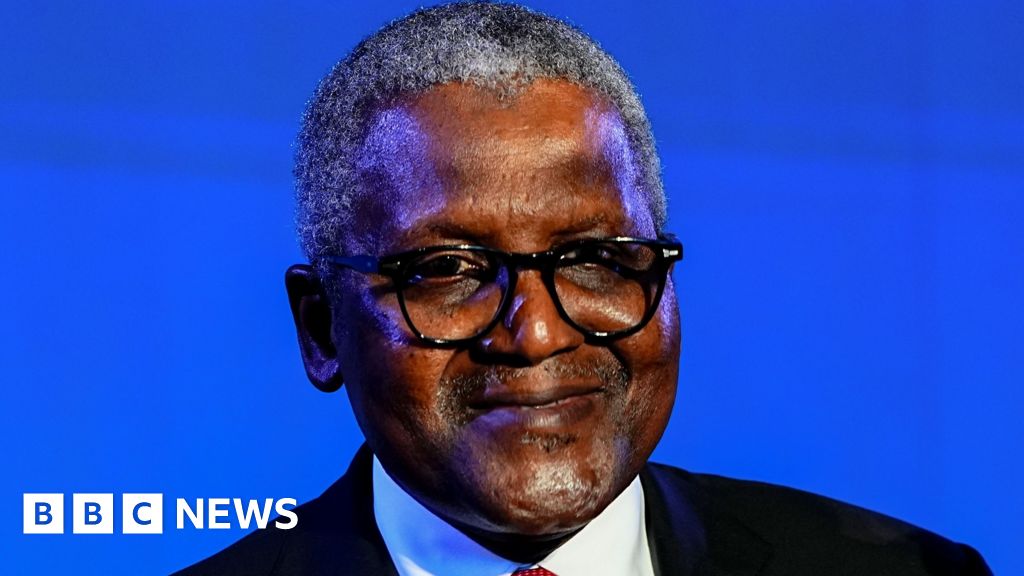
Africa's richest man to launch Kenya oil refinery despite land protests Just now Ondiro Oganga, Nkechi Ogbonna, Focus on Africa, Waihiga Mwaura, BBC Focus on Africa and Peter Mwangangi, BBC Africa Getty Images Aliko Dangote made his fortune in cement before branching into oil Nigerian billionaire Aliko Dangote and Kenya's President William Ruto are set to break ground on a $16bn (£12bn) oil refinery in Lamu, on Kenya's northern coast. Upon completion, the refinery is expected to process 700,000 barrels of crude oil a day, making it East Africa's largest industrial project by capacity. Ahead of the launch, some local residents took to the streets to demand more compensation for land used for the refinery.
Speaking to the BBC, Dangote dismissed the protests as games played by local marketers and international players, insisting the refinery would go ahead and would be ready by 2030 as planned. The Lamu refinery is Kenya's largest infrastructure project since independence, surpassing the $5.1bn (£3.9bn) Standard Gauge Railway. East Africa does not currently have any oil refineries.
In his interview with the BBC's Focus on Africa programme, Dangote disputed the compensation claims and said the company took only the portion of land it needed from what the government made available. "To come and say some people are demonstrating, demonstrating about what? Have you ever seen people demonstrating against themselves in terms of development?" he asked, indicating he was not fazed by the protests.
At the height of construction, Dangote, who is Africa's richest man, said the refinery would create 60,000 jobs, with the benefits extending beyond those employed directly by the project. "Are we going to bring robots? Of course, the people will benefit," he said.
Critics have questioned the decision to build the refinery in Kenya, which is not an oil-producing country. Others have suggested Tanzania or Uganda, both of which are moving towards oil exports through the East African Crude Oil Pipeline. But Kenya's Energy and Petroleum Minister Opiyo Wandayi told the BBC that the refinery's location did not mean it would rely on oil from the region.
"Refineries get crude oil from the market. And the market is open," he said. Dangote made a similar point, citing Singapore as an example.
"Singapore doesn't produce a single drop of oil, yet they have a lot of refineries," Dangote said. The refinery will also include a 1,000-megawatt power plant. Dangote sees reliable electricity as a critical constraint on industrialisation across Africa, particularly in mineral-rich countries that still export raw materials rather than processing them locally.
He has about $50bn (£38bn) worth of projects in the pipeline, including plans to develop 10,000 megawatts of power generation capacity across Africa by 2030, with the potential to double that depending on demand. In Lamu, the new power plant is designed to support Dangote's operations as well as other industries expected to set up in the area. "The power is there and what you do is what we call plug and play," he said.
Kenya has relatively high fuel prices, raising expectations that greater refining capacity could eventually help bring down pump prices. However, the price of crude oil, the main raw material for fuel, set by international markets, remains a major factor in what consumers pay at the pump. The Lamu refinery is Dangote's largest proposed investment outside Nigeria, with construction due to begin on 1 November.
His refinery in Nigeria also has a processing capacity of 700,000 barrels a day. Dangote plans to double that capacity after floating 4.1 million ordinary shares to raise up to $2.1b earlier this month. You may also be interested in: BBC Africa podcasts
Source: BBC